Former Tangrong Brick Kiln |
||
Former Tangrong Brick Kiln is located on Tongmeng Road, beside Love River and Jhongdu Bridge.In 1902 (the 35th of Japanese Emperor Meiji), Japanese set up Samejima Tile Kiln Factory in the Sankuaicuo Suburb, and the Factory was equipped with three traditional multi-entrance Kilns.This was also the first brick kiln in Dagou.In 1913, the economy in Taiwan was booming, and people began to construct more buildings.As the need of bricks had increased, Japanese set up the Taiwan Tile Kiln Corporation to integrate local kiln factories. Then, the Dagou branch of Taiwan Tile Kiln Corporation—Dagou Tile Kiln Factory—was set up.Due to the increasing need of bricks, Dagou Factory built six high-throughput Hoffman kilns (also know as Eight-Diagram Kiln), in order to expand the production scale.At that time, it had provided almost all of the bricks for important constructions in southern Taiwan.In 1946, after the Retrocession of Taiwan, Dagou Tile Kiln Factory was merged into the Industry and Mining Ministry of Taiwan Provincial Administration, and changed its name to Kaohsiung Brick Factory.Later, the owner of Tangrong Iron Works Company, Mr.Tang, Chuan-Zong, bought Kaohsiung Brick Factory in 1957, but it became a government-owned company in 1962.
The production of Tangrong Brick Kiln played an important role in Taiwan’s economic boom in the 60s and 70s.However, as construction methods changed drastically, Tangrong Brick Kiln was forced to close in 1985. As mentioned above, the facilities of Tangrong Brick Kiln were established in several stages.First, the Eight-Diagram Kilns (Hoffman Kiln) and chimneys were built in 1913, and the Reverse Flame Kiln was built in 1975, after the factory was transferred to Tangrong Iron Works Company. On the other hand, the 80-meter long Tunnel Kiln was built during the production of refractory bricks.Now, the Kiln listed as a historical site by Kaohsiung City Government, and in 2005, it was revitalized and became a leisure park for citizens.
There are two major mountain systems in Kaohsiung. The first is Chaishan Hill on north side of the Cc...
The temple was originally called Yuansing Temple and later known as Yanzai Temple.According to the li...
Sanfong Jhong Street is one of the oldest markets in Kaohsiung City.Located beside Jianguo 3rd Road, ...
Sanfong Temple located in Sanmin District was built in 1672, about 300 years ago, making it a famous ...
Situated inside Park No. 2 on Tongmeng Road in Sanmin District, Kaohsiung City Museum of Hakka Cultur...
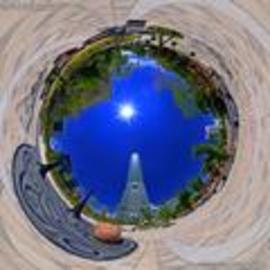
The “Tower of Light” is located at the square of Sanmin No.1 Park opposite to Kaohsiung C...
The “Tower of Light” is located at the square of Sanmin No. 1 Park opposite to Kaohsiung ...
Asia is the biggest continent on Earth, a darling little gem floating around in space.
Hm, what is Asia? Who's in on it?
China and India are safe bets for Asian nations. Korea, Japan, Thailand, you're fine.
Europe? No. Europe would sort of be on the "Asian continent" if not for those pesky Ural mountains dividing things up in the middle, and then also the whole lineage of kings and wealth and nations and the EU and all that "give me my respect" stuff.
Russia would probably be happiest as its own continent, so for now we'll leave it in "Eurasia" and just hope the natural gas supplies keep flowing.
Pakistan and Afghanistan are dang close to Asia, but politically they show up in "Middle East" news stories an awful lot. Verdict: Eurasia.
I guess we'll actually have to consider everything from Turkey on eastward to be "Eurasian", although the moniker seems overlappitory of the territory.
The Asian economy is now officially raging like a wild furnace of lava that consumes everything in its path. Japan has had the largest individual economy in Asia for decades, but it is forecast that both India and China will outstrip Japan within twenty years.
China is the largest holder of United States debt and is positioned to become the world's next superpower, provided that Godzilla doesn't return and decide to stomp everybody back into the Shang Dynasty.
Text by Steve Smith.