Jaffa Clock TowerThe World > Asia > Middle East > Israel |
||
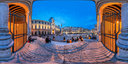
Jaffa's clock tower, three-stories high and crowned with an elaborate multi-gabled roof, was built in the beginning of the 20th century to celebrate the silver jubilee of the reign of the Ottoman Sultan Abd al-Hamid the II*. The clock tower stood in an elongated and ample plaza that was built just outside the walls of Old Jaffa. The plaza bordered with al-Mahmudiyya mosque, Jaffa's major mosque, and with the Kishle (prison) that were inside the old city. To the other side of the plaza, a monumental government palace, the New Saray, was built to replace the Old Saray that was located inside the city walls.
Travelers to Jaffa, coming from the sea in the beginning of the 20th century, would walk on a new and paved quay, surrounding the steep hill of the old city. The first site they would encounter when finally arriving at the entrance of the city would be the clock tower and the neo-classical façade of the New Saray. The clock tower still stands as a welcome sign in the northern border of Jaffa. In 1965 it was renovated and colorful mosaic windows designed by Arie Koren to describe the history of Jaffa were installed.
A train station on the Jaffa-Jerusalem line, located between the sea shore and the Neveh Zedek neighb...
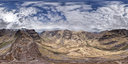
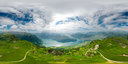
Tel-Aviv apartment. Nikon D90, Nikkor 10.5mm, NN3-MKII.
Modern civilization began right here in the Tigris-Euphrates river valley. Also known as the Fertile Crescent or Mesopotamia, this is the place where, six thousand years ago, agriculture, writing and mathematics were brought into widespread use.
The term "Middle East" comes from the British navy, which used it to describe the countries on the trade route from Europe to India and China. Everything from Afghanistan to Morocco may possibly be classified as "middle eastern", depending on whom you ask -- and when.
Only a partial list of past Empires in the middle eastern territory includes Sumeria, Babylonia, Persia, the Ottoman Empire and the Roman Empire!
When northern Europe was still lurking about in slimy cold stone castles playing chess, the Middle East was enjoying the flowers of poetry, luxurious craftsmanship, music and literature. In fact, the Renaissance in Europe was partly inspired by stories brought back from the middle east by travelers along the trade route.
Strategic location, religious history and the world's largest supply of crude oil have kept the Middle East at the center of world activity for centuries. The saga continues.
Text by Steve Smith.