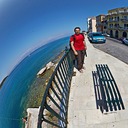
Munster bridge

Munster bridge

Munster bridge
partager
mail
loading...
Loading ...

Photo panoramique par Andrew Usatyuk Pris 13:31, 07/01/2010 - Views loading...

Munster bridge

The World > Europe > Switzerland

Tags: zurich

  • J'aime / J'aime pas
  • thumbs up
  • thumbs down

Images à proximité de Switzerland

map

A: View from Münsterbrücke

Par Jakub Hruska, à 20 mètres

This monumental bridge, which was constructed in 1838, has a commemorative statue of Burgomaster Wald...

View from Münsterbrücke

B: Zürich Limmatquai by Night

Par Fritz Dallenbach, à 20 mètres

Zürich Limmatquai by Night

C: Zurich skyline from the Limmat-Quai

Par Jeffrey Martin, à 50 mètres

Zurich skyline from the Limmat-Quai

D: Hans Waldmann Statue

Par Luis Marques, à 60 mètres

The Hans Waldmann statue is located in Zürich, Switzerland, in front of Frauenkirche and next to the ...

Hans Waldmann Statue

E: Grossmunster Zurich

Par Johan Offermans & Karl Overholt, à 70 mètres

Close-up view of the Grossmunster ("great minster") Romanesque-style church in the center of Zurich, ...

Grossmunster Zurich

F: Grossmunster from a side alley

Par Johan Offermans & Karl Overholt, à 100 mètres

This picture of grossmunster church (see wikipedia for more information), one of the landmarks in Zur...

Grossmunster from a side alley

G: Zurich Grossmunster from Zwingliplatz

Par Cristian Marchi, à 110 mètres

The church in the panorama is the Grossmunster depicted from Zwingliplatz in Zurich, Switzerland. The...

Zurich Grossmunster from Zwingliplatz

H: Zuerich Hotel zum Storchen

Par Marc Gruber, à 120 mètres

Zuerich Hotel zum Storchen

I: Info-board about water birds of Zurich

Par Andrew Usatyuk, à 130 mètres

Info-board about water birds of Zurich

J: Frauenkirche

Par Luis Marques, à 150 mètres

The Frauenkirch is located in Zürich, Switzerland, is a ninth-century church; the Gothic style predom...

Frauenkirche

Ce panorama é été pris à Switzerland, Europe

Ceci est un aperçu de Europe

Europe is generally agreed to be the birthplace of western culture, including such legendary innovations as the democratic nation-state, football and tomato sauce.

The word Europe comes from the Greek goddess Europa, who was kidnapped by Zeus and plunked down on the island of Crete. Europa gradually changed from referring to mainland Greece until it extended finally to include Norway and Russia.

Don't be confused that Europe is called a continent without looking like an island, the way the other continents do. It's okay. The Ural mountains have steadily been there to divide Europe from Asia for the last 250 million years. Russia technically inhabits "Eurasia".

Europe is presently uniting into one political and economic zone with a common currency called the Euro. The European Union originated in 1993 and is now composed of 27 member states. Its headquarters is in Brussels, Belgium.

Do not confuse the EU with the Council of Europe, which has 47 member states and dates to 1949. These two bodies share the same flag, national anthem, and mission of integrating Europe. The headquarters of the Council are located in Strasbourg, France, and it is most famous for its European Court of Human Rights.

In spite of these two bodies, there is still no single Constitution or set of laws applying to all the countries of Europe. Debate rages over the role of the EU in regards to national sovereignty. As of January 2009, the Lisbon Treaty is the closest thing to a European Constitution, yet it has not been approved by all the EU states. 

Text by Steve Smith.

Partager ce panorama