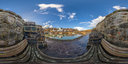
The Carmelite Priory Church, Mdina, Malta

The Carmelite Priory Church, Mdina, Malta

The Carmelite Priory Church, Mdina, Malta
partager
mail
loading...
Loading ...

Photo panoramique par Matt Wellard Pris 12:30, 18/10/2010 - Views loading...

The Carmelite Priory Church, Mdina, Malta

The World > Europe > Malta

  • J'aime / J'aime pas
  • thumbs up
  • thumbs down

The Carmelite Priory sits within the silent city of Mdina. Here the streets are narrow and mainly populated by tourists. The church within the priory is attributed to French architect Mederico Blondel. Start in February 1660 and completed in 1675. It is one of the most important centralised churches in Maltese Baroque Architecture.

Images à proximité de Malta

map

A: Mdina, Malta

Par Ursula & David Molenda, à 20 mètres

Mdina, Malta

B: Carmelite Priory, Mdina

Par Matt Wellard, à 30 mètres

This is one of the rooms in the Carmelite Priory in Mdina, Malta. Some of this is now a museum but is...

Carmelite Priory, Mdina

C: Mdina, Malta

Par Ursula & David Molenda, à 40 mètres

Mdina, Malta

D: St. Paul's Cathedral, Mdina, Malta

Par Ursula & David Molenda, à 70 mètres

St. Paul's Cathedral, Mdina, Malta

E: Casa del tesoriere in Mdina

Par Andrea Biffi, à 80 mètres

Casa del tesoriere in Mdina

F: Mdina Cathedral

Par Andrea Biffi, à 80 mètres

Mdina Cathedral

G: St. Paul's Cathedral, Mdina

Par Matt Wellard, à 110 mètres

St. Paul's Cathedral Mdina is one half of the Bishop of Malta's seat. The other half being St John's ...

St. Paul's Cathedral, Mdina

H: Mdina - Malta

Par Martin Berta, à 120 mètres

Fortifications from the Napoleonic era.

Mdina - Malta

I: panorama from Mdina

Par Andrea Biffi, à 130 mètres

panorama from Mdina

J: Mdina walls

Par Andrea Biffi, à 200 mètres

Mdina walls

Ce panorama é été pris à Malta, Europe

Ceci est un aperçu de Europe

Europe is generally agreed to be the birthplace of western culture, including such legendary innovations as the democratic nation-state, football and tomato sauce.

The word Europe comes from the Greek goddess Europa, who was kidnapped by Zeus and plunked down on the island of Crete. Europa gradually changed from referring to mainland Greece until it extended finally to include Norway and Russia.

Don't be confused that Europe is called a continent without looking like an island, the way the other continents do. It's okay. The Ural mountains have steadily been there to divide Europe from Asia for the last 250 million years. Russia technically inhabits "Eurasia".

Europe is presently uniting into one political and economic zone with a common currency called the Euro. The European Union originated in 1993 and is now composed of 27 member states. Its headquarters is in Brussels, Belgium.

Do not confuse the EU with the Council of Europe, which has 47 member states and dates to 1949. These two bodies share the same flag, national anthem, and mission of integrating Europe. The headquarters of the Council are located in Strasbourg, France, and it is most famous for its European Court of Human Rights.

In spite of these two bodies, there is still no single Constitution or set of laws applying to all the countries of Europe. Debate rages over the role of the EU in regards to national sovereignty. As of January 2009, the Lisbon Treaty is the closest thing to a European Constitution, yet it has not been approved by all the EU states. 

Text by Steve Smith.

Partager ce panorama