![]() Loading ...
Panoramic photo by
Sergej Esnault
گرفته شده در 11:15, 20/08/2009
- Views |
||
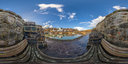
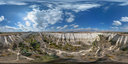
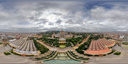
View from the roof in the village Al Gabal - Ḩuţayb - Qaḑā' Ḩarāz - YemenThe World > Asia > Middle East > Yemen |
||
90 km west of Sana’a in the Harraz Mountains lies Manakha, about 2200 meters above sea level. Manakha is remarkable for its enormous deep ravines and fog-topped mountains. Its beautiful terraced hillsides are bountiful due to the amount of rain it receives, mostly during the monsoon season. The Harraz region is famous for its coffee, qat and landscape. Depending on whom you ask, people will also tell you that the men of Harraz are some of the best dancers in Yemen.
Coming from Suq al-Wadi, at one point it is inevitable that your eyes are drawn towards Dar al Hajar....
Thula is a historical town located 45 kilometers to the northwest of Sana'a. The city is famous for i...
http://en.wikipedia.org/wiki/Sana'a
The old city of Sana'a is a World Heritage Site. It's easy to see why: hundreds of traditional red-br...
Modern civilization began right here in the Tigris-Euphrates river valley. Also known as the Fertile Crescent or Mesopotamia, this is the place where, six thousand years ago, agriculture, writing and mathematics were brought into widespread use.
The term "Middle East" comes from the British navy, which used it to describe the countries on the trade route from Europe to India and China. Everything from Afghanistan to Morocco may possibly be classified as "middle eastern", depending on whom you ask -- and when.
Only a partial list of past Empires in the middle eastern territory includes Sumeria, Babylonia, Persia, the Ottoman Empire and the Roman Empire!
When northern Europe was still lurking about in slimy cold stone castles playing chess, the Middle East was enjoying the flowers of poetry, luxurious craftsmanship, music and literature. In fact, the Renaissance in Europe was partly inspired by stories brought back from the middle east by travelers along the trade route.
Strategic location, religious history and the world's largest supply of crude oil have kept the Middle East at the center of world activity for centuries. The saga continues.
Text by Steve Smith.