Paseo de España 1 |
||
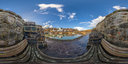
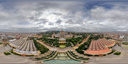
El Paseo de España es el eje central del barrio de construcción mas reciente de Jaén: "El Boulevard".
Con estructura elíptica, aloja en su interior tres parques y este es el que está mas al sur.
Destaca por sus jardines y fuentes, siendo muy grata la vistita nocturna en las calurosas noches de Verano.
El Paseo de España es el eje central del barrio de construcción mas reciente de Jaén, conocido como e...
El Paseo de España es el eje central del barrio de Boulevard de Jaén.Con estructura elíptica, alberga...
Situada en la intersecció9n de la avenida de la Estación con la Avenida de Andalucía, este pequeño es...
La fuente centrtal del parque de la Victoria de Jaén puede verse iluminada por las noches y en verano...
La plaza de las Batallas se encuentra en el Paseo de la estación y tiene un monumento en el centro cu...
La plaza de las Batallas se encuentra en la mitad del Paseo de la Estación, frente al parque de la Vi...
El Parque de la Victoria es el mas céntrico de los lugares de recreo de Jaén. Dotado de una frondosa ...
El parque de la Victoria es la zona de esparcimiento mas céntrica de Jaén. Dotada de una arboleda fro...
La plaza Coca de la Piñera se encuentra en el centro de Jaén: entre la avenidad de Madrid y el Paseo ...
Europe is generally agreed to be the birthplace of western culture, including such legendary innovations as the democratic nation-state, football and tomato sauce.
The word Europe comes from the Greek goddess Europa, who was kidnapped by Zeus and plunked down on the island of Crete. Europa gradually changed from referring to mainland Greece until it extended finally to include Norway and Russia.
Don't be confused that Europe is called a continent without looking like an island, the way the other continents do. It's okay. The Ural mountains have steadily been there to divide Europe from Asia for the last 250 million years. Russia technically inhabits "Eurasia".
Europe is presently uniting into one political and economic zone with a common currency called the Euro. The European Union originated in 1993 and is now composed of 27 member states. Its headquarters is in Brussels, Belgium.
Do not confuse the EU with the Council of Europe, which has 47 member states and dates to 1949. These two bodies share the same flag, national anthem, and mission of integrating Europe. The headquarters of the Council are located in Strasbourg, France, and it is most famous for its European Court of Human Rights.
In spite of these two bodies, there is still no single Constitution or set of laws applying to all the countries of Europe. Debate rages over the role of the EU in regards to national sovereignty. As of January 2009, the Lisbon Treaty is the closest thing to a European Constitution, yet it has not been approved by all the EU states.
Text by Steve Smith.