

0 Likes
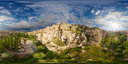
The Rochessadoule Valley in the Cévennes was quite densely populated in the 19th century, with nearly 5,000 inhabitants, when coal was being mined there and the associated industries (particularly the manufacture of mining lamps) were flourishing. On this side of the valley, olive trees were grown, and probably mulberry trees too, for silk production. On the opposite side was a funicular railway that transported the coal down into the valley to the train. All that is long gone – the coal industry has been phased out, and the olive trees have run wild – but you can still see the terraces. The population has fallen to just over 800.
...
Languedoc-Roussillon is a French region which is composed of five departments. It is bounded by Spain, Andorra in the south and along the Mediterranean Sea (Gulf of Lions). Other French region limit the regions of Languedoc-Roussillon: Provence-Alpes-Cote d'Azur, Rhone-Alpes, Auvergne, Midi-Pyrenees. The natural boundaries are the Pyrenees and the so-called threshold Lauragais, the Cévennes and the Rhône.In 2004, the Regional Council chose a joint new logo symbolizes the sun, which has the motto: "Living in Septimania. In fact, the current president of the Regional Council, Georges Freche wanted to rename the area "Septimania", but then it has to do so. Septimania is an old name, used since the fifth century for the region, but the Department of Lozère was not yet among them. Above all, the Catalans rejected by an overwhelming majority of this amendment. After numerous protests, including a demonstration of about 8,000 people on the 8th October 2005 in Perpignan, Georges Freche was the project of Bezeichnugsänderung in "Septimania" and the name of the region Languedoc-Roussillon "is introduced as an official designation for the Regon.The languages of the region along with French, Occitan (Languedoc, Auvergne, Provence), and Catalan. The name of the region favors Lengadòc-Rosselhon Occitan and Catalan Rosselló-Llenguadoc.