Open Map
Close Map
N
Projections and Nav Modes
  • Normal View
  • Fisheye View
  • Architectural View
  • Stereographic View
  • Little Planet View
  • Panini View
Click and Drag / QTVR mode
Condividi questo panorama
For Non-Commercial Use Only
This panorama can be embedded into a non-commercial site at no charge. Leggi oltre
Do you agree to the Terms & Conditions?
For commercial use, Contattaci
Embed this Panorama
LarghezzaAltezza
For Non-Commercial Use Only
For commercial use, Contattaci
LICENSE MODAL

0 Likes

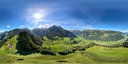
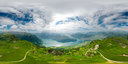
Ardeche
France
Ardèche (French pronunciation: [aʁdɛʃ]; Occitan: Ardecha, pronounced [aɾˈdet͡ʃɔ]; Arpitan: Ardecha) is a department in Auvergne-Rhône-Alpes, Southeastern France. It is named after the river Ardèche and had a population of 328,278 as of 2019. Its prefecture is in Privas, but its largest city is Annonay. Prehistory and ancient history. Humans have inhabited the area at least since the Upper Paleolithic, as attested by the famous cave paintings at Chauvet Pont d'Arc. The Ardèche river plateau has extensive standing stones (mainly dolmens and some menhirs), erected thousands of years ago. The river has one of Europe's largest canyons, and the caves that dot the cliffs—which go as high as 300 metres (1,000 feet)—are known for signs of prehistoric inhabitants (arrowheads and flint knives are often found). The Vivarais, as the Ardèche is still called, takes its name and coat of arms from Viviers, which was the capital of the Gaulish tribe of Helvii, part of Gallia Narbonensis, after the destruction of their previous capital at Alba-la-Romaine. Saint Andéol, a disciple of Polycarp, is supposed to have evangelized the Vivarais during the reign of Emperor Septimius Severus, and was supposedly martyred in 208. Legend tells of Andéol's burial by Amycia Eucheria Tullia. In 430, Auxonius transferred the see to Viviers as a result of the problems suffered at its previous site in Alba Augusta. https://en.wikipedia.org/wiki/Ard%C3%A8che
Copyright: Frank Ellmerich
Type: Spherical
Resolution: 16000x8000
Taken: 15/09/2025
Caricate: 15/09/2025
Published: 15/09/2025
Numero di visualizzazioni:

...


Tags: french; frankreich; ardeche; department; river; fluss; rhone; alps; alpen; zentralmassiv; chauvet; höhle; cave; largest; canyon; cliff
More About France

France is affectionately referred to as "the Hexagon" for its overall shape.French history goes back to the Gauls, a Celtic tribe which inhabited the area circa 300BC until being conquered by Julius Caesar.The Franks were the first tribe to adopt Catholic Christianity after the Roman Empire collapsed. France became an independent location in the Treaty of Verdun in (843 AD), which divided up Charlemagne's Carolingian Empire into several portions.The French monarchy reached its zenith during the reign of Louis XIV, the Sun King, who stood for seventy-two years as the Monarch of all Monarchs. His palace of Versailles and its Hall of Mirrors are a splendid treasure-trove of Baroque art.The French Revolution ended the rule of the monarchy with the motto "Liberty, Equality, Fraternity!" On July 14th, 1789 angry mobs stormed La Bastille prison and began the Revolution in which Louis XVI, his wife Marie-Antoinette and thousands of others met the guillotine.One decade after the revolution, Napolean Bonaparte seized control of the Republic and named himself Emperor. His armies conquered most of Europe and his Napoleonic Code became a lasting legal foundation for concepts of personal status and property.During the period of colonization France controlled the largest empire in the world, second only to Britain.France is one of the founding members of the European Union and the United Nations, as well as one of the nuclear armed nations of the world.Text by Steve Smith.
It looks like you’re creating an order.
If you have any questions before you checkout, just let us know at [email protected] and we’ll get right back to you.