

0 Likes
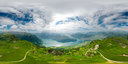
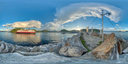
A view of the Bilo Battery Historical Site west of Suva, Fiji. Constructed in 1941 during the height of World War II, the guns at Bilo peninsula lent a degree of comfort to the people in a time of uncertainty and fear as news of the Japanese invasion flashed across the Pacific. The guns no longer exist today, however they once pointed out from the side of Bilo Peninsula down to the Bay of Islands in Lami and across Suva Harbour to the capital. They were placed there to guard the passage in the reef leading into Suva Harbour. They were the biggest guns in the southern hemisphere at the time, and they played a part in the defence plans of Fiji during World War II. The Bilo battery had two six-inch cannons supported by two 4.7 inch guns. After the war, the guns were taken away by the Fiji military.
From: https://www.rfmf.mil.fj/bilo-battery-historical-site/
...
Fiji is one of the larger island groups in the South Pacific ocean with over 332 islands and a total land area of around 18,000 square kilometres. The island group is dominated by two large islands, Viti Levu (the main island) and Vanua Levu (to the NE).The geography is mostly volcanic being formed around 150 million years ago. There is still some geothermal activity in Vanua Levu near Savusavu and on the island of Taveuni.The Population of Fiji is approximately 850,000 most of which live on the two main islands. Three languages are spoken: Fijian, Fiji Hindi and English. The capital city is Suva on the island Viti Levu.The main international airport is located near Nadi town on the western side of Viti Levu and this is where the majority of the hotels and resorts are located. Popular regions to visit include the Mamanuca and Yasawa Islands and the Coral Coast (South side of Viti Levu).