

0 Likes
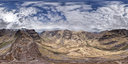
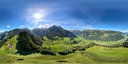
A 120m aerial view overlooking Field, British Columbia. An unincorporated community, it has a recorded population of 169 people. Located along the Kicking Horse River & TransCanada Highway, it is a midpoint between Golden & Lake Louise, Alberta. The surrounding area is rich in fossil history, w/ glimpses of nearby Mt. Stephen & Walcott Peak, home to the world famous Burgess Shale formation of well-preserved extinct marine life found nowhere else in the world.
More info here: https://en.wikipedia.org/wiki/Field,_British_Columbia
...


The Rocky Mountains (or Rockies) are a major mountain range in western North America. The Rocky Mountains stretch more than 4,800 kilometres (2,980 mi) from the northernmost part of British Columbia, in Canada, to New Mexico, in the United States. The range's highest peak is Mount Elbert in Colorado at 14,440 feet (4,401 m) above sea level. Though part of North America's Pacific Cordillera, the Rockies are distinct from the Pacific Coast Ranges (as named in Canada) or Pacific Mountain System (as known in the United States), which are located immediately adjacent to the Pacific coast.The eastern edge of the Rockies rises impressively above the Interior Plains of central North America, including the Front Range of Colorado, the Wind River Range and Big Horn Mountains of Wyoming, the Absaroka-Beartooth ranges and Rocky Mountain Front of Montana, and the Clark Range of Alberta. In Canada geographers define three main groups of ranges: the Continental Ranges, Hart Ranges and Muskwa Ranges (the latter two flank the Peace River, the only river to pierce the Rockies, and are collectively referred to as the Northern Rockies). Mount Robson in British Columbia, at 3,954 metres (12,972 ft), is the highest peak in the Canadian Rockies. The Muskwa and Hart Ranges together comprise what is known as the Northern Rockies (the Mackenzie Mountains north of the Liard River are sometimes referred to as being part of the Rockies but this is an unofficial designation).The western edge of the Rockies includes subranges such as the Wasatch near Salt Lake City and the Bitterroots along the Idaho-Montana border. The Great Basin and Columbia River Plateau separate these subranges from distinct ranges further to the west, most prominent among which are the Sierra Nevada, Cascade Range and Coast Mountains. The Rockies do not extend into the Yukon or Alaska, or into central British Columbia, where the Rocky Mountain System (but not the Rocky Mountains) includes the Columbia Mountains, the southward extension of which is considered part of the Rockies in the United States. The Rocky Mountain System within the United States is a United States physiographic region; the Rocky Mountain System is known in Canada as the Eastern System.