

0 Likes
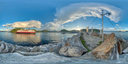
A view of Fuerte Santiago (Fort Santiago) in Portobelo, Panamá. These structures along w/ nearby Fuerte San Jerónimo, are part of the Portobelo monumental complex, declared a UNESCO World Heritage Site in 1980.
Portobelo was founded in 1597 as a port for transfer of precious metals by the Spaniards across the Isthmus back to Spain. Portobelo was first sacked in 1601 by the buccaneer William Parker. In 1688, the pirate Henry Morgan carried out the bloodiest attack and plundering of the city, lasting 14 days. Walking through the fort, it's very difficult to disconnect from the events surrounding the coveted gold that was stored in the city's customs building before its transfer to Spain, much of the gold being mined & transported from the Andes Mountains.
The first fortifications were built around 1600 w/ this layout completed in 1753 out of coral blocks. Situated along the edge of the Caribbean Sea, sentries would spot pirate ships and sound the alarm to prepare for battle. These reinforced fortifications were not enough to stop the English admiral Edward Vernon, who sacked the city in 1739. However the Spanish would reclaim victory two years later in the Battle of Cartagena de Indias, part of the War of Jenkins' Ear. This attack caused the Spanish crown to seek another route for gold shipment, placing Portobelo and its inhabitants in a very difficult economic situation. Smaller vessels & other ports were utilized, as well as travel around Cape Horn at the southern tip of South America.
From:
https://lacabanga.com/fuerte-santiago-de-la-gloria/
...
Panama, a country in Latin America.Huge diversity of landscapes, animals and botanics.Landscapes of tropical rainforests, hillsides, carrebean islands, modern city and ancient places are only some of the highlights of this country.